
Red Clay Staining on Siding and Trim: Causes and Fixes
Oct 9, 2026 · 4 min read
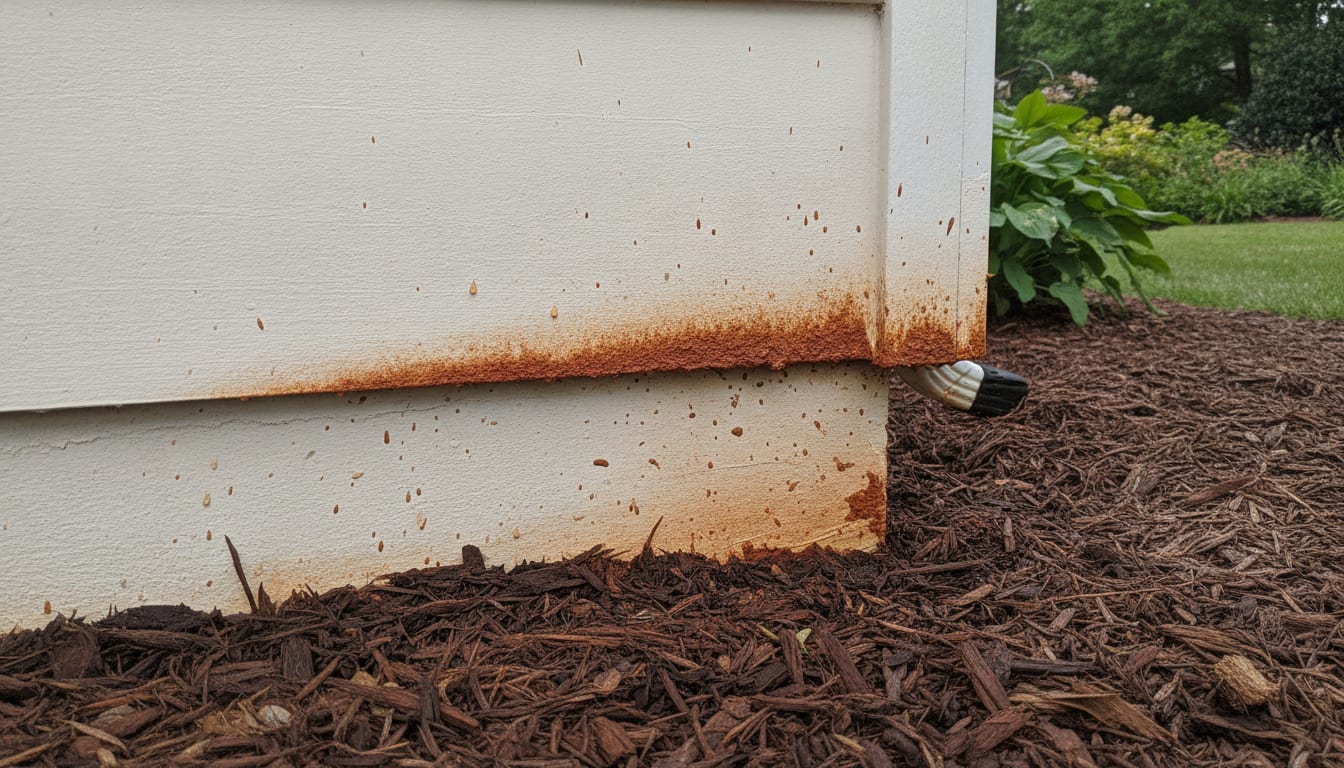
If you live in Charlotte, Marvin, or Weddington, you have seen it. A rust-orange band creeping up the bottom foot or two of siding, worst after a hard rain. That is red clay, and it is one of the most common staining problems we run into on exterior jobs from Eastover to Broadmoor in Marvin.
Why Red Clay Stains Siding and Trim
Piedmont soil is full of iron oxide. When rain hits bare ground, mulch beds, or a sloped yard, it splashes clay-tinted water onto the lower courses of siding and trim. On wood siding, especially older homes in Myers Park and Foxcroft, the stain does not just sit on the surface. It wicks into the grain and into any hairline cracks in the paint film. On newer homes in Marvin and Weddington, the same thing happens on fiber cement and trim boards, just with less grain to grab onto.
Lots with heavy tree canopy make it worse. Mulch beds hold more moisture, irrigation sprays hit the same wall section every day, and wooded acreage in Marvin often has long dirt driveways and disturbed soil near the house from construction or landscaping. Downspouts that dump at the foundation instead of into a pipe are another common cause we see on both older and newer homes.
How the Stain Gets Cleaned
Pressure washing is the first step, but it has to be done at the right pressure and distance for the substrate. Too much pressure on old wood siding in Eastover or Myers Park can blow out soft grain and strip sound paint along with the dirt. On fiber cement in Weddington Chase or Providence Downs, the risk is different — too much water forced behind a lap can cause problems down the road. We adjust pressure and add a mild cleaning solution to lift the clay without damaging the material underneath.
Deep-set staining sometimes needs a second pass or a longer dwell time with cleaner before rinsing. If the stain has actually penetrated bare wood, cleaning alone will not fully clear it. That is where priming comes in — a stain-blocking primer seals the discoloration so it does not bleed through the topcoat.
Preventing It From Coming Back
Cleaning solves the stain you already have. Prevention is about managing water and soil contact going forward. A few things help:
- Pull mulch and soil back a few inches from siding so splash-back lands on the ground, not the wall.
- Redirect downspouts away from the foundation instead of letting them discharge at the base of the house.
- Keep gutters clear so water sheets off the roof evenly instead of overflowing onto one section of wall.
- Choose a paint film with good adhesion and a sheen that resists dirt pickup on the lower courses, which we specify in the estimate based on the siding material.
On some exposures, especially low trim boards that sit close to grade or get hit by sprinkler overspray, an elastomeric coating makes sense. It is a thicker, more flexible film that bridges hairline cracks and sheds water better than a standard paint. We do not use it everywhere — it is a call we make based on the substrate and the exposure, not a default.
Timing Matters Too
Spring and fall are still the best windows for exterior painting in Charlotte, Marvin, and Weddington. Spring brings pine pollen, which settles into wet paint if you catch it at the wrong moment, so we watch the pollen count along with the weather. Summer work is doable if we start early in the day and stay ahead of afternoon humidity and storms, which affect how paint cures. Whatever the season, we clean and let the surface dry fully before any primer or paint goes on — painting over damp, stained siding just traps the problem under a new coat.
This kind of work comes up on all kinds of homes in our area — mid-century ranches in Foxcroft, split-levels in Quail Hollow, wooded lots in Marvin, and custom builds in Weddington Chase. The fix is the same principle everywhere: clean it right, prime where needed, and manage the water and soil that caused it in the first place.
Frequently Asked Questions
Can red clay staining be cleaned off without repainting?
Often yes, if the stain is on the paint surface and hasn't soaked into bare wood. A proper pressure wash with the right solution usually lifts it. If the stain has penetrated the material, a stain-blocking primer and fresh coat are the only real fix.
Will red clay stains keep coming back after cleaning?
They can, if the cause isn't addressed. Mulch splash, misdirected downspouts, and sprinkler overspray will reintroduce the same staining. We point out the likely sources when we walk a job and estimate accordingly.
Is red clay staining worse on older wood siding or newer fiber cement?
Old wood siding, common in Eastover and Myers Park, absorbs stain into the grain more readily. Fiber cement on newer homes in Marvin and Weddington resists absorption better, but the splash pattern and prevention steps are the same either way.
Want a number on your job?
The owner walks it with you and writes it up itemized. Free, no obligation.