
Popcorn Ceiling Removal in Older Charlotte Homes
Oct 22, 2026 · 5 min read
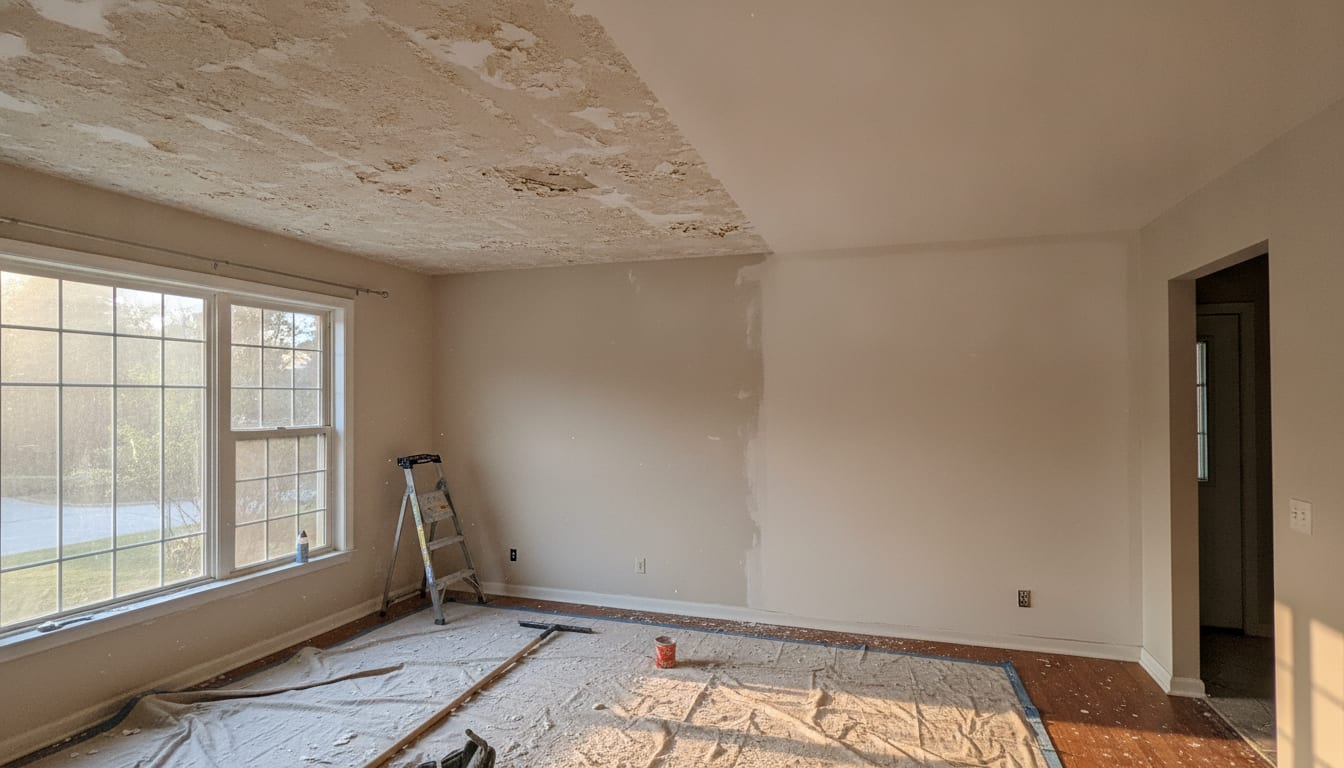
Walk through a lot of houses built from the 1950s through the 1970s in Charlotte, and you will find the same ceiling overhead. Popcorn texture was fast to spray, cheap, and it hid seams and minor framing movement without much finish work. Builders liked it because it saved a step. Homeowners today mostly want it gone, especially in Eastover and Myers Park homes where the ceiling is the one surface that never got updated along with everything else.
Why Popcorn Shows Up So Often in Older Charlotte Ceilings
In the older, in-town neighborhoods, popcorn texture usually sits over plaster or early drywall. It was applied as a cover coat, not a finish anyone expected to last fifty-plus years looking good. Over time it yellows, sags near bathrooms and kitchens, and collects dust in a way flat paint never does. In Foxcroft and Quail Hollow, where mid-century ranch and split-level homes are common, you will see the same texture in long hallway runs and low ceilings, sometimes with a few decades of repaint over the top of it.
If your home dates to the 1920s through 1940s, like much of Eastover or the Queens Road and Cherokee Road sections of Myers Park, the ceiling underneath the texture is often original plaster. That changes the removal plan. Plaster is repaired to match the original profile, not boarded over, and we do that work in house rather than subcontracting it out.
What Removal Actually Involves
Popcorn removal is mostly prep work, and prep is where the job either holds up or doesn't. The general sequence:
1. Test and Protect
Homes built before 1978 may have lead-era coatings somewhere in the finish history. That is a live consideration on a lot of Eastover and Myers Park ceilings, and we talk through it with you before any sanding or scraping starts. Floors, furniture and fixtures get covered first either way.
2. Wet and Scrape
The texture gets misted and scraped off in sections. This keeps dust down and protects the substrate underneath, whether that is plaster or drywall.
3. Skim Coat
Once the texture is off, the ceiling almost never looks finish-ready. It gets skimmed flat with joint compound to even out scrape marks, old seams, and any damage that was hiding under the texture. This is the step that takes the most time and the most skill, and it is the difference between a ceiling that looks professionally redone and one that still shows every flaw once the light hits it.
4. Prime and Finish
A fresh ceiling gets a coat of primer suited to new compound, then the finish coat. If you want knockdown or orange peel texture instead of flat, we apply or match that at this stage rather than leaving bare drywall.
What About Drywall Instead of Skim Coating?
Sometimes the ceiling underneath is too damaged to skim economically, especially if there is water staining or old patch work layered on top of each other. In that case, new board gets hung over the old ceiling or the old material comes down and new drywall goes up. That is a judgment call made in person, on site, because it depends on what is actually up there once the texture is gone.
Why Fall Is a Good Time for This Work
Interior projects like popcorn removal don't depend on weather the way exterior painting does, but fall still makes sense for a reason: it gets the mess and the drying time out of the way before the holidays. Skim coating needs time to dry between coats, and nobody wants that happening in a dining room the week before guests arrive. Getting it scheduled in September or October means living rooms and ceilings are finished, not half-sanded, by the time the house fills up for the season.
What This Looks Like for General Contractors
On renovation and new construction jobs, ceiling texture removal and finish painting run on the same schedule as drywall work, so there is no gap waiting on a second trade. That holds whether it is a plaster ceiling repair in an older Eastover remodel or a straightforward drywall finish on a Marvin or Weddington custom build.
Get a Ceiling Looked At Before the Holidays
If you have popcorn texture you want gone before the season fills up, call or text (704) 280-4264. The owner comes out, looks at what is actually on your ceiling, and gives you a free, written, itemized estimate. No pressure, no guessing at a number over the phone.
Frequently Asked Questions
Does popcorn ceiling removal make a big mess?
There is dust and debris, but floors, furniture and fixtures are covered before anything gets scraped. We clean up as we go, and the house stays livable while the work is happening.
Can you match the ceiling texture, or does it have to be flat?
Either one. Most homeowners want it skimmed flat and painted smooth, but if you want knockdown or orange peel texture to match adjoining rooms, we apply or match that during the finish stage.
Is my old ceiling plaster or drywall under the texture?
It depends on the age of the house. Homes from the 1920s through 1940s in neighborhoods like Eastover and Myers Park are often plaster. Later mid-century homes in areas like Foxcroft and Quail Hollow are more often drywall. The owner can tell once the texture comes off, and plaster is repaired to match rather than boarded over.
Want a number on your job?
The owner walks it with you and writes it up itemized. Free, no obligation.