
Mildew on Siding Under Tree Canopy: Charlotte & Marvin Homes
Oct 8, 2026 · 4 min read
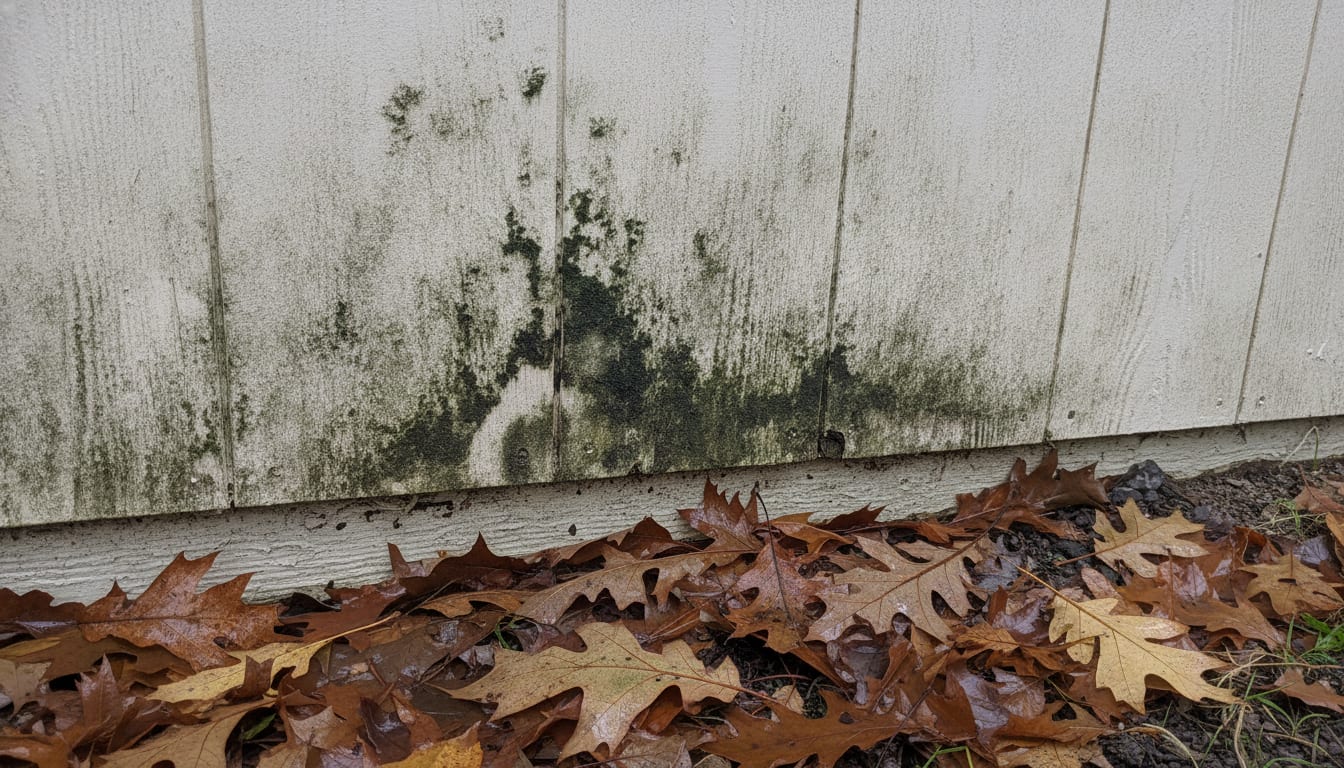
If you've got big oaks or a wooded lot and you're seeing dark, blotchy streaks on the siding that stay damp longer than the rest of the house, that's mildew, not dirt. We see it constantly on homes under heavy canopy in Eastover and Myers Park, where old oaks shade the street, and just as often on wooded acreage out in Marvin, where a house might sit under five acres of hardwoods with almost no direct sun hitting one whole side.
Why Shade and Damp Fall Weather Cause It
Mildew needs three things: moisture, shade, and something to feed on. A heavy tree canopy gives it two of those automatically. Leaves block sun, so siding under canopy can stay wet for hours after a rain or a heavy dew while the rest of the house has already dried. Fall makes it worse. Cooler nights, shorter days, and morning dew that lingers in shaded areas add up to exactly the damp, low-light conditions mildew likes. Add falling leaves and pine straw piling against the base of the siding, and you've got organic matter sitting right where moisture collects.
This shows up differently depending on the house. On mid-century ranch and split-level homes in Foxcroft and Quail Hollow, it tends to collect on long, low trim runs and under eaves where mature trees shade half-acre lots most of the day. On wooded acreage in Marvin, it often runs the full length of a shaded wall, sometimes down onto outbuildings and barns that sit even deeper in the trees. On newer custom homes in Weddington Chase and Providence Downs, canopy mildew usually shows up where landscaping has matured faster than expected, shading siding that was originally meant to get more sun.
Mildew vs. Red Clay Staining
It's worth telling the two apart before you decide what you're dealing with. Mildew is usually black, gray, or greenish, blotchy, and tends to wipe or spread under a damp cloth. Red clay staining from splash-back during storms sits lower on the wall, has a rust or orange cast, and doesn't spread the way mildew does. Both need to be addressed before paint goes on, but they're removed differently, and a surface that's painted over either one without proper cleaning will fail early.
Why Pressure Washing Alone Isn't Enough
Pressure washing knocks mildew off the surface, but it doesn't kill what's left in the pores of the wood or siding, and it doesn't change the conditions that let it grow back. That's why we treat canopy-shaded exteriors as a prep problem first. Our exterior painting process starts with pressure cleaning to strip off mildew, pollen film, and grime, followed by scraping and sanding any failing paint, then spot-priming bare or stained areas before any topcoat goes on. On surfaces where mildew has been a repeat problem, or where shade means the wall almost never fully dries, an elastomeric coating can make sense. It's thicker, bridges hairline cracks, and holds up better in a spot that stays damp longer than the rest of the house. We'll tell you plainly if your situation calls for it or if a standard exterior coating will do the job just fine — we're not going to upsell a coating a house doesn't need.
Timing Matters as Much as Prep
Spring and fall are the best windows for exterior work in Charlotte, and that holds true on shaded lots too, maybe more so. Painting over damp or actively growing mildew just seals moisture under the new coat, which is the fastest way to see it bleed back through. We schedule shaded exteriors around actual drying conditions, not just the calendar, and we'll say so if a section needs an extra day to dry out before we prime it.
What This Looks Like on the House
Whether it's a wooded lot in Marvin with a barn or outbuilding tucked under the trees, a split-level in Quail Hollow with deep eave overhangs, or a shaded side wall in Eastover, the approach is the same: clean it properly, let it dry, address any bare or damaged wood, prime, then finish. The owner walks every exterior personally before pricing it, because a mildew problem on one wall doesn't mean the whole house needs the same treatment, and we'll say so if the job is smaller than it looks from the ground.
Frequently Asked Questions
Can mildew on siding be fixed, or does the siding need to be replaced?
In almost every case it can be cleaned and repainted. Mildew sits on the surface and in the top layer of paint or wood. Replacement only comes up if the wood underneath has actually rotted, which we'll check for during the walk-through.
Will mildew just come back after I repaint?
It can, if the shade and moisture conditions haven't changed. That's why proper cleaning and priming matter, and why we'll talk through whether an elastomeric coating makes sense for a wall that stays damp longer than the rest of the house.
Is mildew the same as mold, and is it dangerous?
Mildew is a surface fungus and is generally a cosmetic and paint-performance issue on exterior siding, not a structural one. If you're ever concerned about mold inside the home itself, that's a different conversation and worth having with a specialist.
Want a number on your job?
The owner walks it with you and writes it up itemized. Free, no obligation.