
Humidity and Exterior Paint Cure in Charlotte Summers
Oct 7, 2026 · 5 min read
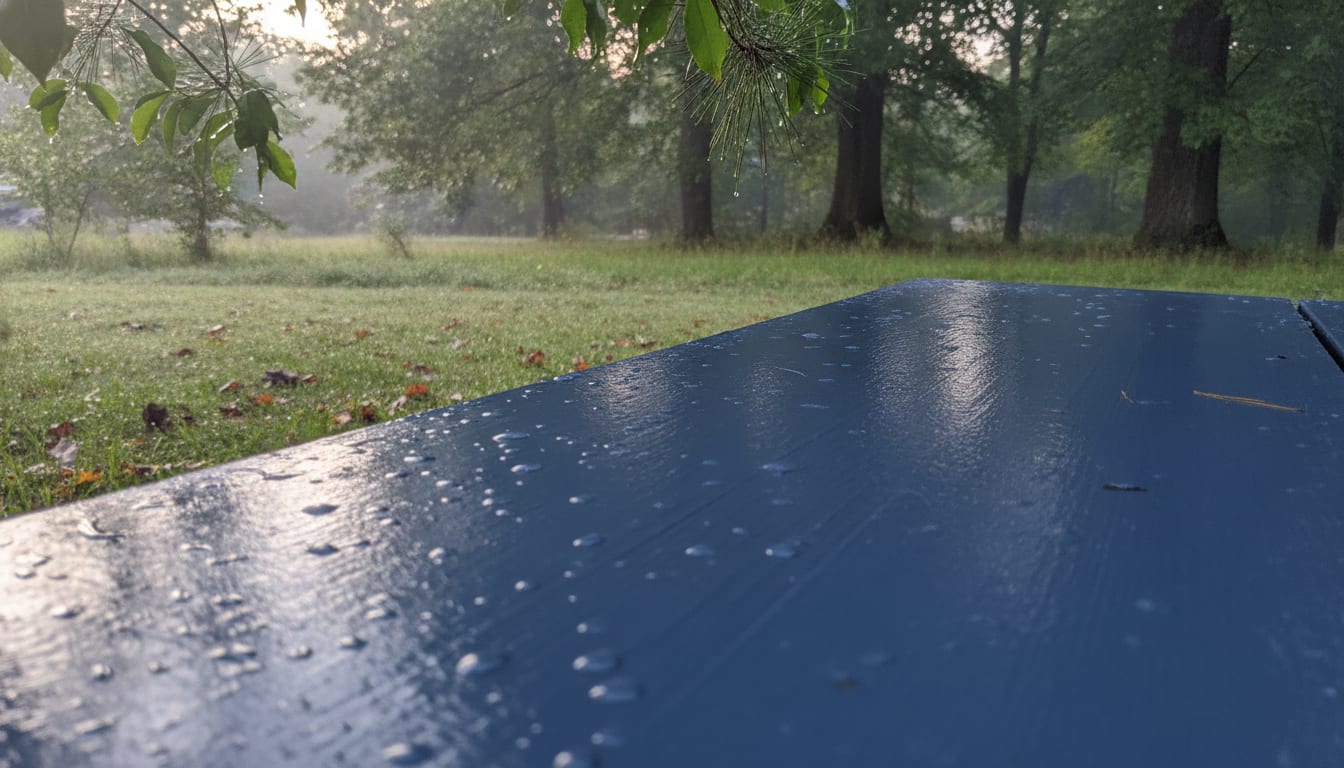
Charlotte summers are hot, and they are wet in a way that catches a lot of homeowners off guard. The humidity does not just make the job uncomfortable for whoever is holding the brush. It changes how paint actually dries and cures on the wall, and if the timing is wrong, the finish pays for it later. This matters whether you are in a 1920s house in Eastover, a mid-century ranch in Foxcroft, or a custom build on a wooded lot in Marvin.
What humidity actually does to a coat of paint
Paint dries in two stages. First the surface sets up and looks dry to the touch. Then it cures, which is the slower chemical process underneath that gives the film its hardness and adhesion. High humidity slows that second stage down, sometimes by a lot. The surface can feel ready for a second coat while the first coat is still soft underneath. Recoat too soon in those conditions and you trap moisture between layers. That shows up later as poor adhesion, a soft finish that scuffs easily, or peeling that seems to start for no reason a year or two down the road.
Humidity also affects how paint lays down in the first place. In heavy moisture, latex paint can struggle to flow and level the way it should, especially on long trim runs like you see on the low, horizontal lines of a Foxcroft or Quail Hollow ranch or split-level. We watch the dew point, not just the temperature, before we commit to a finish coat.
Why early fall is trickier than people expect
By the time Charlotte's daytime temperatures ease off in September and October, most homeowners assume the hard part of the paint season is over. Humidity does not always cooperate with that calendar. Charlotte can run warm and damp well into early fall, with heavy morning dew that burns off late and air that stays thick into the afternoon. That lingering humidity delays cure the same way a July heat wave does, just with less obvious heat to blame. We check moisture readings on the substrate itself, not just the forecast, before we start a coat this time of year.
How we time the work around it
We build the schedule around the surface, not the calendar date. That means starting early in the day once dew has lifted, watching the humidity and temperature window for the specific product going on the wall, and building in enough time between coats so the first one actually cures before the second goes on. On a wooded lot in Marvin, where tree cover keeps moisture around longer, that window can run later into the morning than it would on an open lot in Weddington Chase or Providence Downs. Heavy canopy also invites mildew on siding that stays shaded and damp, so we clean and treat that before any primer goes on, not after.
Red clay is its own factor here too. Splash-back during heavy rain stains lower siding and trim, and that staining needs to be addressed in prep, or it bleeds through a fresh coat. None of this is complicated work, but it is work that has to happen in the right order and at the right time of day.
What this means for different homes in our area
A large custom home in Weddington with a lot of exterior surface area takes longer to move through than a small ranch, which means the cure window has to be managed across several days, not just one. On wooded acreage in Marvin, we are often painting barns and outbuildings along with the main house, and those structures can sit in shade most of the day, so they get their own timing. If you are painting before listing a home in Marvin or Weddington, we build the schedule backward from your target listing date so the exterior has time to cure properly rather than being rushed.
Spring and fall are still the best general windows for exterior work in Charlotte. Summer is workable too, as long as we start early and stay ahead of the afternoon heat, storms, and the kind of humidity that lingers into the evening. We would rather tell you a job needs an extra day between coats than hand you a finish that fails early.
Frequently Asked Questions
Does humidity mean you just don't paint in summer?
No. Summer works fine if we start early in the day and plan around the heat, storms, and humidity rather than pushing a coat on in bad conditions. Spring and fall are still the easiest windows, but summer is not off the table.
How do you know if humidity is too high to paint?
We check the dew point and surface moisture before starting a coat, not just the air temperature. If conditions are not right for proper cure, we wait rather than apply paint that will fail later.
Does tree cover make the humidity problem worse?
Yes. Shaded, wooded lots in Marvin and tree-canopy neighborhoods in Charlotte hold moisture longer, which can also lead to mildew on siding. We clean and treat for that in prep and build extra time into the schedule where the canopy is heavy.
If you want a schedule built around your property instead of a guess, call or text (704) 280-4264. The estimate is free, written, itemized, and comes with no obligation.
Want a number on your job?
The owner walks it with you and writes it up itemized. Free, no obligation.